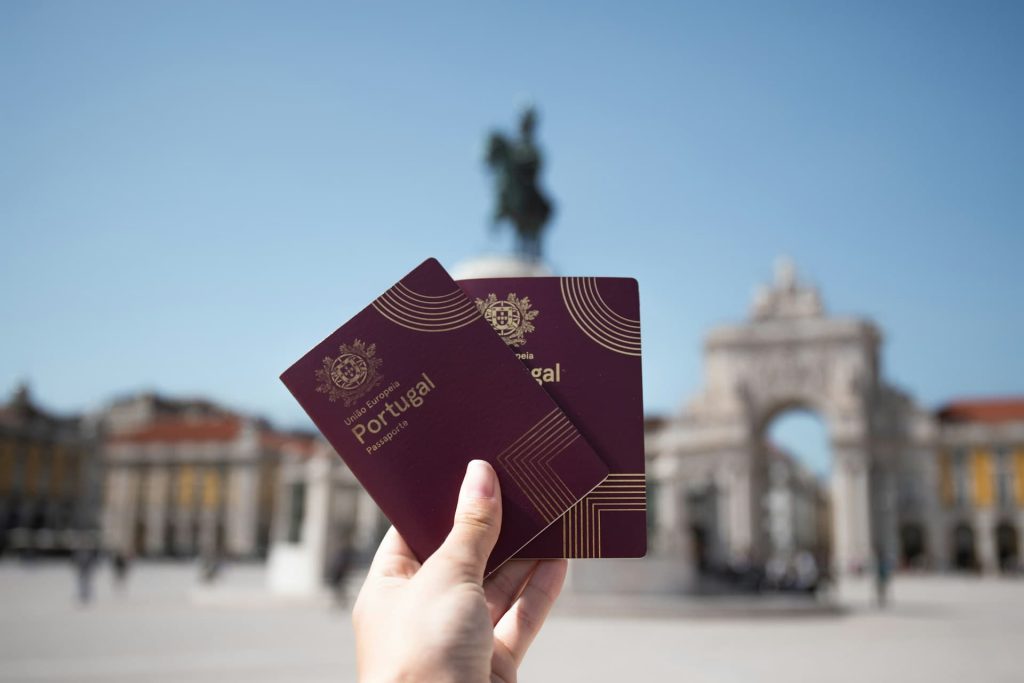
Portugal is one of the most accessible EU countries for obtaining legal residence — and one of the most misunderstood. There are multiple pathways, each designed for a different type of applicant. Choosing the wrong one leads to rejection. Choosing the right one opens the door to EU residence, Schengen travel freedom, and a path to Portuguese citizenship.
This guide covers the main residence permit options available in 2026 — who each one is for, what the requirements are, and what the process actually looks like.
Why Portugal
Portugal consistently ranks among the most attractive EU destinations for international residents. The reasons are practical:
- EU residence permit — valid across the Schengen Area for travel; path to permanent residency and citizenship after 5 years
- Stable legal framework — residence permits issued for 2 years initially, renewable; clear process managed by AIMA (Agency for Integration, Migrations and Asylum)
- Quality of life — mild climate, affordable cost of living compared to Western Europe, English widely spoken in cities
- Tax environment — Portugal offers tax incentive programmes for qualifying new residents; specific terms depend on income type and residency status
- Citizenship pathway — after 5 years of legal residence, you may apply for Portuguese citizenship, subject to meeting language and residency requirements
Portugal does not offer a single residence pathway. The correct option depends on your income source, employment status, and goals.
Main Residence Permit Options in 2026
D8 — Digital Nomad Visa
For remote workers, freelancers, and employees of foreign companies.
- Minimum income: €3,680/month (4x Portuguese minimum wage, 2026 threshold)
- Income must come from outside Portugal — employment contract or freelance agreements with non-Portuguese employers or clients
- Residence permit: 2 years, renewable for 3 more years
- Family inclusion: spouse (+50% income) and dependent children (+30% each) can be included
- Application: submitted at the Portuguese consulate in the applicant’s home country; AIMA appointment required after arrival for residence card issuance
The D8 is the primary route for professionals working remotely. The D7 was previously used for this purpose — it is now reserved for passive income only, and applications from active remote workers under D7 are regularly rejected.
D7 — Passive Income Visa
For retirees, pensioners, and individuals with recurring passive income.
- Minimum income: €920/month (equivalent to Portuguese minimum wage) from passive sources — pensions, dividends, rental income, royalties
- Active employment income does not qualify for this route
- Residence permit: 2 years, renewable; path to permanent residency and citizenship
- Family inclusion: available; spouse and dependent family members can join under D6 family reunification
- Right to work: permitted after residence permit is issued (for remote/non-Portuguese employment)
The D7 is well-suited for individuals with pension income or investment returns who want to relocate to Portugal without continuing active employment. It is one of the more accessible routes given the lower income threshold.
D3 — Highly Qualified Specialist
For professionals relocating to work for a Portuguese employer.
- Requires a confirmed employment contract with a registered Portuguese employer
- Minimum salary: from €2,100/month; contract duration minimum 1 year
- Intended for skilled professionals — engineers, IT specialists, healthcare professionals, managers
- Residence permit: tied to employment; renewable as long as employment continues
The D3 is the standard route for qualified professionals who have secured a position with a Portuguese employer and are relocating to work in Portugal physically. It differs from the D8 in that employment is with a Portuguese entity, not a foreign one.
D2 — Entrepreneur / Self-Employment
For entrepreneurs, business owners, and independent professionals establishing an economic activity in Portugal.
- Requires a viable business plan demonstrating economic benefit to Portugal
- Sufficient funds: typically at least €5,000+ available; proof of ability to sustain yourself and your business
- No fixed minimum investment threshold — viability of the business concept is the key criterion
- Residence permit: 2 years, renewable; path to permanent residency and citizenship
The D2 suits founders, consultants, or freelancers whose activity is linked to Portugal — operating a Portuguese company, contracting Portuguese clients, or establishing a local economic presence.
D6 — Family Reunification
For spouses, dependent children, and parents of individuals who already hold a Portuguese residence permit.
- Based on the main applicant’s existing residence permit — D7, D8, D2, D3, or other valid permit
- Permits family members to reside legally in Portugal and access education, healthcare, and employment rights
Family reunification can be initiated at the same time as the main applicant’s permit or applied for separately after the main permit is issued.
Startup Visa
For founders of innovative, scalable businesses.
- Approval required from a certified Portuguese incubator and IAPMEI (Portuguese Agency for Competitiveness and Innovation)
- Business must be innovative and scalable — not a standard local business
- No minimum investment threshold — proof of funds for self-sufficiency required (minimum €6,200 in savings)
The Startup Visa is designed for technology founders and innovation-driven entrepreneurs. The IAPMEI evaluation process assesses the business concept before a permit application proceeds.
How the Process Works
Regardless of the permit type, the general sequence is:
- Step 1: Determine the correct permit option for your specific situation — income type, employment status, and residency goals
- Step 2: Prepare documents — passport, income proof, criminal record certificate (apostilled), health insurance, proof of accommodation in Portugal
- Step 3: Submit the visa application at the Portuguese consulate in your country of residence
- Step 4: Enter Portugal on the issued visa (typically valid 4 months)
- Step 5: Book an AIMA appointment and apply for the residence card — issued for 2 years initially
Total realistic timeline from document preparation to holding the residence card: 4–7 months, depending on consulate and AIMA processing queues. AIMA appointment availability has been a frequent bottleneck — booking early is essential.
All foreign documents must be apostilled and, where required, translated into Portuguese by a certified translator.
Common Reasons for Rejection
Most rejections are avoidable. The most frequent causes:
- Applying under the wrong permit category — for example, using D7 for active freelance income that now falls under D8
- Income documentation that does not clearly demonstrate the required threshold
- Proof of accommodation missing or not meeting the minimum 12-month rental contract requirement
- Missing apostille on criminal record or other official documents
- Inconsistency between stated income source and supporting documents
Each application is assessed individually. The same income level can be approved or rejected depending on how documents are structured and presented.
Applying for a Portugal Residence Permit?
We provide end-to-end support for individuals and families obtaining residence permits in Portugal — from selecting the right programme to document preparation and AIMA appointment coordination.
- Free initial assessment of your situation and eligible options
- Personal case manager — single point of contact throughout the process
- Document checklist and preparation support
- Support until your residence card is in your hands
Working with Clients Who Want Portuguese Residence?
We partner with immigration consultants, relocation agencies, and financial advisors who refer clients seeking EU residence through Portugal. Our programme covers all main permit routes — D7, D8, D2, D3, Startup, and family reunification.
- Structured B2B cooperation with clearly defined roles and timelines
- Case-by-case eligibility assessment for referred clients
- Professional support throughout the full process