Albania is one of Europe’s fastest-growing economies — and one of the least explored by international recruitment agencies. With GDP growth of 3.4% in 2025, over 11 million tourist arrivals in 2024, and acute labour shortages across tourism, construction, and manufacturing, the demand for foreign workers is real and growing. Understanding the market accurately — including both the opportunities and the operational challenges — is what separates effective placements from wasted effort.
Albania is not an EU member state, which gives it flexibility in immigration policy. EU accession negotiations opened formally in October 2024, and alignment with EU labour and immigration standards is underway. For now, the country manages its own work permit framework — employer-led, structured, and manageable for agencies working with verified employers.
Why Albania Needs Foreign Workers
Albania’s labour shortage is structural and deepening, driven by several intersecting factors:
- Rapid population decline: Albania’s population fell 14% between 2011 and 2023, from 2.8 million to 2.4 million — one of the steepest drops in Europe. The working-age pool is shrinking every year.
- Mass emigration: over 429,000 people left Albania in the past 13 years, including 40% of the highly educated workforce. Young skilled Albanians continue to move to Italy, Germany, and Greece for higher wages.
- Tourism boom creating demand faster than supply: 11.7 million tourist arrivals in 2024 (up 15.2% year-on-year) have created acute shortages in hospitality, food service, and tourism support — sectors with chronic local labour gaps.
- Construction at capacity: infrastructure investment and real estate development in Tirana, Durrës, and coastal zones are running at full pace, but qualified construction workers are consistently unavailable domestically.
Albanian businesses are actively recruiting from Asia, the Western Balkans, and Eastern Europe to fill these gaps. The government has recognised the problem and is simplifying foreign worker access as part of broader economic reform.
Top Sectors Hiring Foreign Workers in Albania
Tourism and Hospitality
Tourism is Albania’s most dynamic sector, accounting for over 26% of GDP and growing fast. The Ionian and Adriatic coasts — particularly Sarandë, Vlorë, and Himara — generate intense seasonal demand from April through October. The sector needs workers at all levels:
- Cooks, kitchen staff, and food preparation workers
- Waiters and front-of-house service staff
- Hotel housekeeping and cleaning staff
- Receptionists and hospitality coordinators
Peak season runs May through September on the southern coast. English language skills are a clear advantage in tourist areas. Seasonal work permits are available for tourism roles, with a simplified procedure compared to standard employment permits.
Construction and Infrastructure
Albania’s construction sector is one of the most active in the Western Balkans, driven by government infrastructure investment, coastal real estate development, and EU-co-funded projects. Major urban centres — Tirana, Durrës, Shkodër — have consistent year-round demand.
- Bricklayers, carpenters, and concrete workers
- Electricians and installation technicians
- Welders and metalworkers
- Painters, tilers, and finishing trades
Construction is one of the sectors where foreign worker shortages are most acute. Many Albanian construction workers have relocated to Germany, Italy, and other EU markets, creating persistent vacancies that domestic training pipelines cannot close.
Manufacturing
Albania’s manufacturing base — textiles, food processing, and light industry — is growing, supported by foreign direct investment from Italy and Germany attracted by competitive labour costs and geographic proximity to EU markets.
- Textile and garment workers (particularly in Shkodër, Berat, and Fier)
- Food processing and packaging operators
- Assembly workers for electronics and components
- Machine operators in industrial zones near Tirana and Durrës
Manufacturing placements in Albania typically involve longer contracts and more stable year-round demand than seasonal tourism roles — a better fit for agencies building sustained pipelines.
Agriculture
Agriculture still employs a significant share of Albania’s workforce and generates seasonal demand for field workers, particularly in Fier, Lushnje, and Korçë regions:
- Fruit and vegetable picking (summer and autumn harvest)
- Greenhouse and cultivation work
- Irrigation and farm support roles
Agricultural seasonal permits use a simplified procedure and require minimal documentation. Entry requirements are low, making this pathway accessible for workers without formal qualifications.
Work Permit Process in Albania — Current Framework
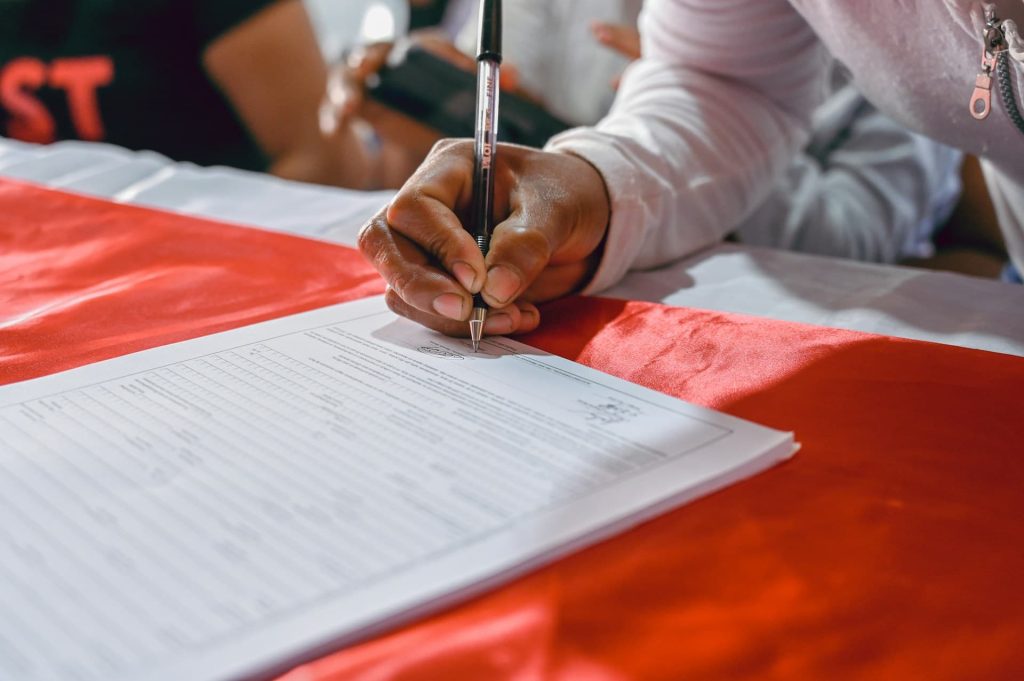
Albania’s work permit system is employer-led and managed by the National Employment Service (NES) and the Ministry of Finance and Economy. The process is structured but manageable for agencies working with compliant employers.
- Job offer and labour market check
The employer confirms the position and submits a request to the Albanian Labour Office to assess whether a suitable local candidate is available. For shortage sectors (tourism, construction, hospitality), this step is typically completed quickly. The employer must be a registered Albanian company with legal hiring status. - Work permit application
The employer submits the full work permit application to the NES or Ministry of Finance and Economy, including the employment contract, company registration documents, candidate’s qualifications, and justification for hiring a foreign national. All documents must be translated into Albanian and notarised. Processing time: 30–45 working days. - Type D visa application
Once the work permit is approved, the candidate applies for a Type D long-stay visa at the Albanian embassy or consulate in their home country. Required documents include passport, work permit approval, employment contract, criminal record certificate, health insurance, and proof of accommodation. Processing: typically 2–4 weeks. - Arrival and residence permit application
After arriving in Albania, the worker must apply for a Temporary Residence Permit within 30 days at the Regional Migration Office. The permit is valid for 1 year and is renewable. After 5 years of legal employment in Albania, the worker may apply for permanent residency.
Total realistic timeline from job offer to arrival: 6–10 weeks. For seasonal permits (agriculture and tourism), the process is simplified and generally faster.
Permit Types in Albania
- Type A/P (Employment permit): standard route for employees of Albanian companies; valid 1 year, renewable up to 3 years total
- Type A/S (Seasonal permit): for agriculture and tourism roles; shorter duration; simplified procedure
- Type B/VP (Self-employment): for freelancers and business owners; valid 1 year
- Type B/I (Investor permit): for foreign investors with minimum €200,000 investment; valid 3 years
The correct permit type depends on the employment structure and duration. Misclassification is a common error — verify before submitting.
What Candidates Need to Know
Salaries and Minimum Wage
Albania’s minimum wage is increasing significantly: from January 2026, the statutory minimum rises to 50,000 ALL gross per month (approximately €490), up from 40,000 ALL — a 25% increase that reflects the government’s strategy to reduce emigration pressure.
Salary benchmarks by sector:
- Tourism and hospitality: €400–€700 gross/month; coastal positions during peak season often include accommodation and meals
- Construction (labourer to skilled): €500–€900 gross/month depending on trade and location
- Manufacturing: €400–€700 gross/month at entry level
- IT and technology: €800–€2,000+ gross/month; Tirana-based tech roles pay significantly above national averages
Salaries in Albania are lower than in Central or Western Europe, but the cost of living is among the lowest in the continent. Candidates from higher-cost-of-living countries should factor net purchasing power into their assessment, not gross salary alone.
Language
Albanian (Shqip) is the official language. Practical reality by sector:
- Tourism and hospitality: English is widely spoken in coastal tourist areas and urban hotels; Italian is also useful, particularly in Durrës and Vlorë
- Construction and manufacturing: basic Albanian (A1–A2) or Italian is helpful; many employers manage multilingual teams
- IT and multinationals: English is the standard working language
Italian is spoken by a significant number of Albanians — particularly older workers — due to Italy’s geographic proximity and historical ties. Italian speakers have a meaningful practical advantage in workplace communication.
Living Costs
Albania has one of the lowest costs of living in Europe. A single person can live comfortably in a regional city on €500–€700 per month including rent. Tirana is more expensive but remains significantly cheaper than any EU capital.
Employer-provided accommodation is common in tourism (particularly coastal resorts) and construction placements. Always confirm terms in writing before the candidate travels — accommodation quality varies significantly between employers.
What Agencies and Employers Need to Know
- Informal economy is significant — work only with compliant employers: approximately 50% of Albania’s economy operates informally. Only verified, formally registered employers with legal hiring capacity provide the documentation needed for work permit applications.
- Document translation and notarisation is mandatory: all foreign documents must be translated into Albanian and notarised before submission. Budget time for this — it adds 1–2 weeks to the process.
- 30-day residence permit deadline after arrival: the worker must register and apply for a residence permit within 30 days of arrival. Missed deadlines create legal complications for both the employer and the worker.
- Seasonal permit for tourism is the fastest route: for Adriatic coast summer placements, the seasonal work permit is simpler and processes faster than standard employment permits. Use it where eligible.
- Retention is a real challenge: some international workers placed in Albania subsequently move to EU countries for higher wages. Set realistic expectations with employers and prioritise accommodation quality and contract stability as retention factors.
- EU accession process adds long-term stability: Albania’s formal EU accession negotiations, launched in October 2024, signal progressive alignment of labour, immigration, and employment standards with EU frameworks. The direction of travel is toward increased structure and compliance.
Building a Recruitment Pipeline into Albania?
We work with agencies and employers placing workers in Albania — providing verified job opportunities in tourism, construction, and manufacturing, with document support and compliance guidance for the current regulatory framework.